

Season stats
Stats not available yet
Stats are not available for this player yet.
About
College / University
Providence College(3 more in the W)



Height
5'4"
Age
32
Hometown
Madison, NJ
Weight
145 lbs
Pronunciation
KATH-er-in ZIM-er-manFrom The Local W
Owned interviews, pressers, and player clips from @thelocalw_.


Zodiac Detail
Cosmic Playstyle
The Anchor
Capricorn Rooster
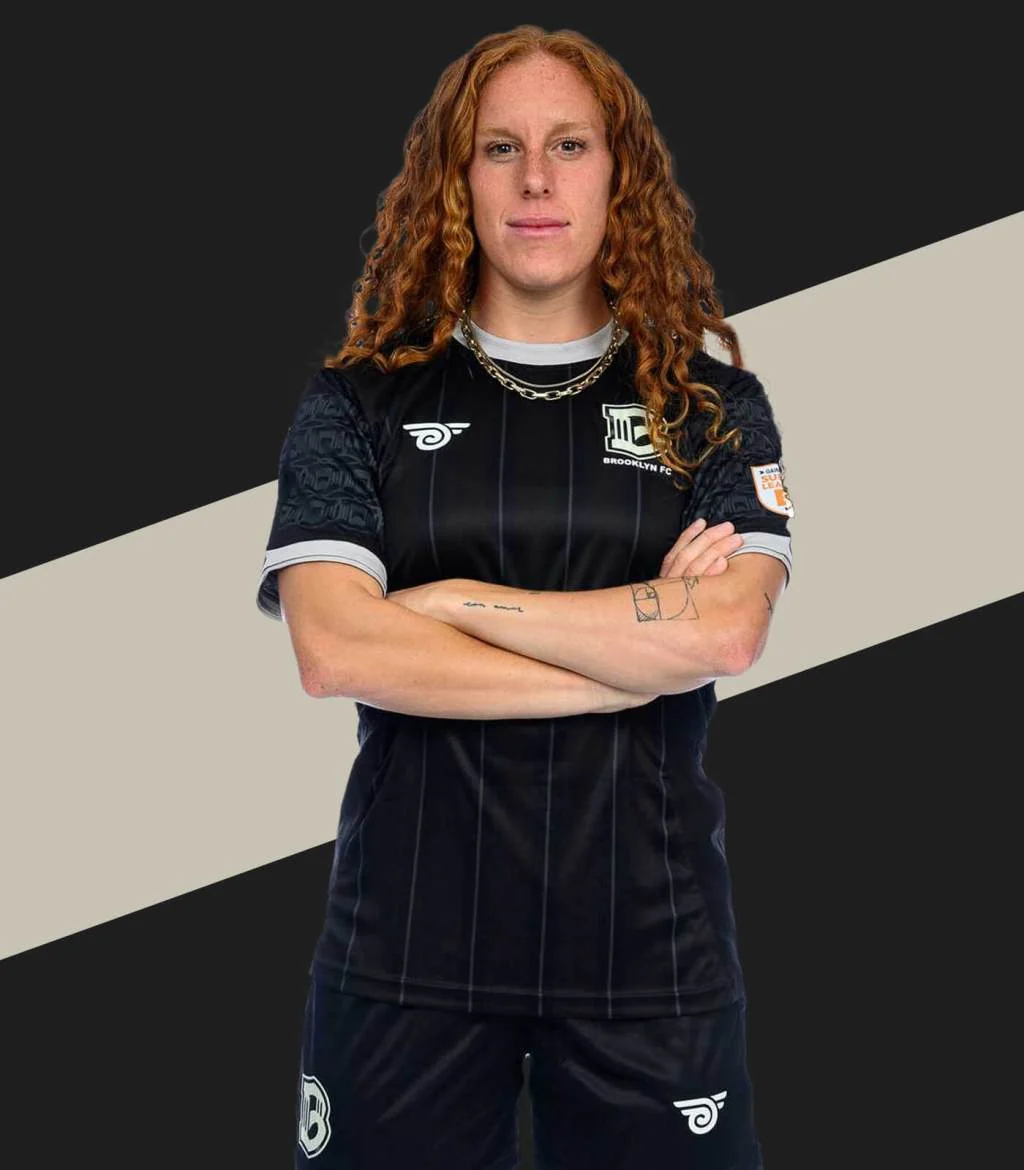
Catherine Zimmerman attacks from the forward line as a Capricorn Rooster, a combination that produces a forward with meticulous preparation, clinical finishing, and an unwavering commitment to professional excellence. The Capricorn dimension gives her the discipline to maintain her positioning and timing regardless of match circumstances, while the Rooster adds a confident precision to her technical execution. She does not rely on flair or improvisation to create goal-scoring opportunities. She relies on repetition, preparation, and an almost mechanical consistency in her finishing technique. Zimmerman approaches the forward position like a craftsman refining her skills until the margin of error shrinks to almost nothing. Her goals come from preparation meeting opportunity with clinical efficiency.
On the field, Zimmerman operates as a striker who converts chances with a reliability that makes her one of the most dependable forwards on the roster. Her Capricorn patience allows her to wait for the right moment to make her run, timing her movement to stay onside while arriving in goal-scoring positions with precision. The Rooster confidence shows up in her finishing technique, where she strikes the ball with the conviction of someone who has practiced each specific scenario hundreds of times. She does not overcomplicate chances or attempt finishes outside her technical range. She takes the opportunity the defense gives her and converts it with clean, efficient technique. Her movement in the box is purposeful rather than frantic, creating space through intelligent positioning rather than constant motion. Zimmerman scores goals the same way every time, perfectly.
Zimmerman brings a professional standard to the attacking unit that raises the performance level of everyone around her. The Capricorn Rooster does not accept shortcuts in preparation or complacency in execution, and that mindset influences the entire forward group during training sessions. She approaches every finishing drill with the intensity of a match situation, and younger forwards learn from watching her routine and the consistency it produces. In team settings, she contributes tactical observations about defensive weaknesses, providing specific information that helps the entire attacking unit make better decisions. When the team needs a goal, teammates look to Zimmerman because they trust her preparation and know she will execute when the chance arrives.
The counter to Zimmerman involves defenders who match her positioning discipline and deny her the space she needs to operate inside the penalty area. Organized defensive units that maintain compact shape and track her runs eliminate the gaps she exploits with her timed movement. If you force her to receive the ball with her back to goal or in wide areas away from the center of the penalty box, her finishing effectiveness drops significantly. Physical center backs who get body to body with her prevent the clean striking technique that makes her so dangerous in the box. Teams that limit her to one or two chances per match reduce her impact because she needs opportunities to apply her clinical finishing. Zimmerman needs space and chances. Deny her both, and the craftsman has nothing to work with.
You Might Also Like







📊 Explore deeper stats